Introduction
Ask which of the available water disinfection technologies is “best” and you’ll get a confident answer from whoever sells one. The honest engineering answer is that UV, chlorination, and ozone solve overlapping but distinct problems, and the right choice depends on water quality, the pathogens of concern, whether a residual is needed downstream, and what the facility can realistically operate and maintain.
This article is a comparison framework for water disinfection technologies, not a recommendation. Each technology has conditions where it is clearly the right tool and conditions where it is clearly the wrong one — and many well-designed systems use more than one in combination.
Chlorination: Residual Protection, With Trade-Offs
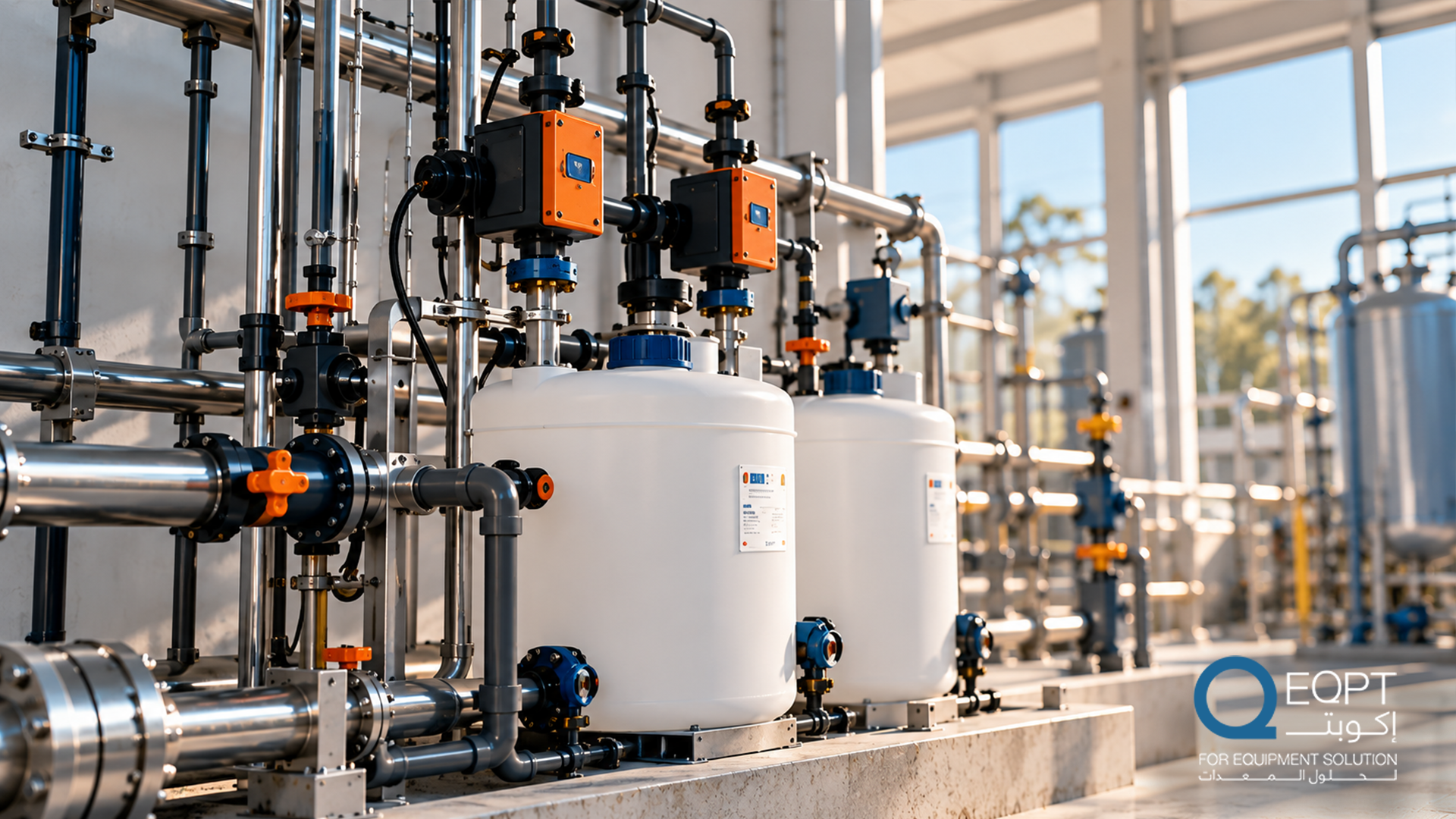
Chlorination’s defining strength is its residual: it continues protecting water as it moves through the distribution network, which is why it remains the standard choice wherever long-term distribution protection is required. It is generally the most cost-effective option and can be generated on-site in gas or liquid form. Its weaknesses are specific: it is less effective against chlorine-resistant organisms such as Cryptosporidium, it reacts with organic matter to form disinfection byproducts (DBPs) like trihalomethanes — a particular concern in waters with higher organic carbon content — and it requires rigorous chemical handling and safety protocols.
UV Disinfection: Fast, Clean, But No Residual
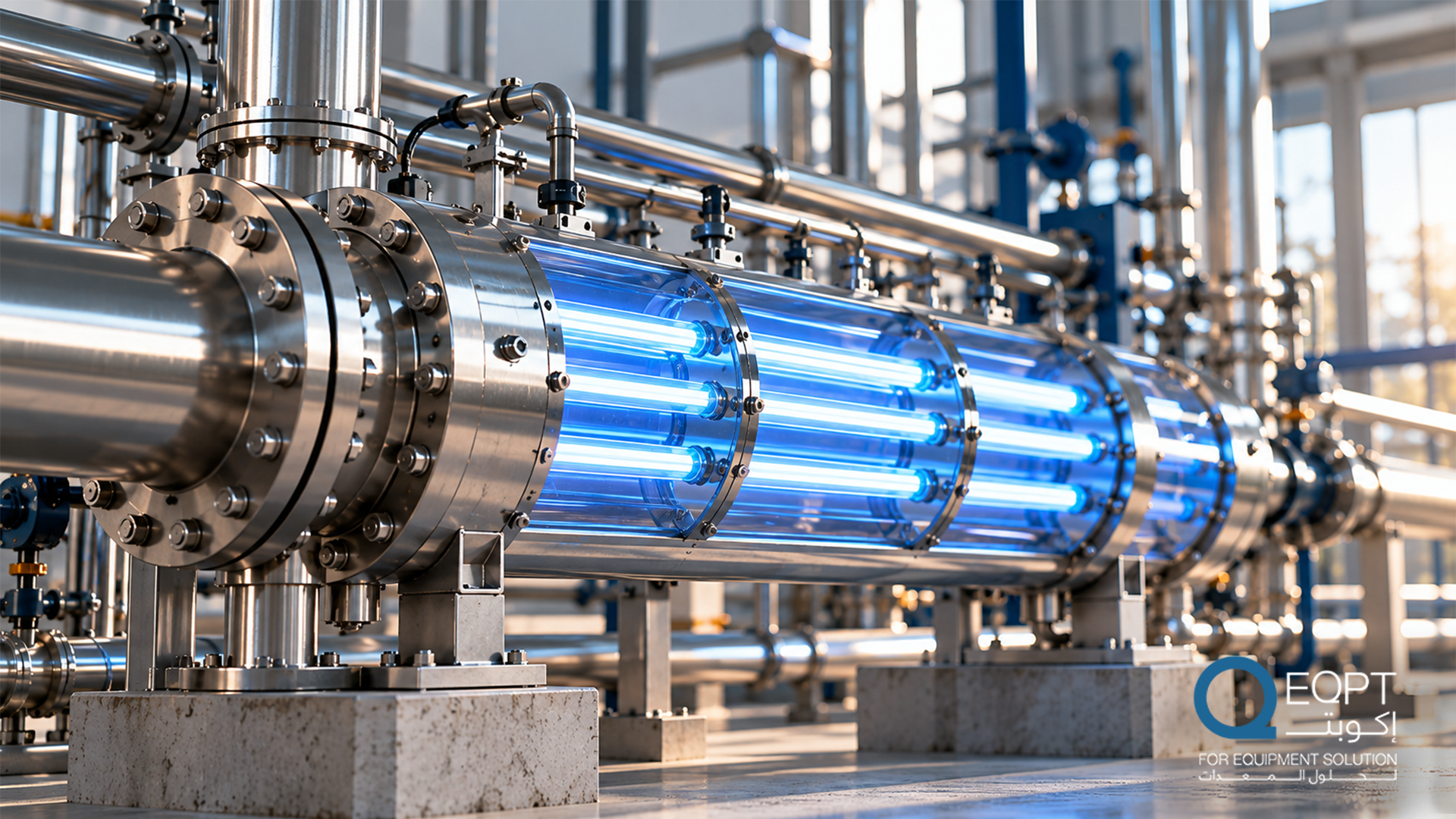
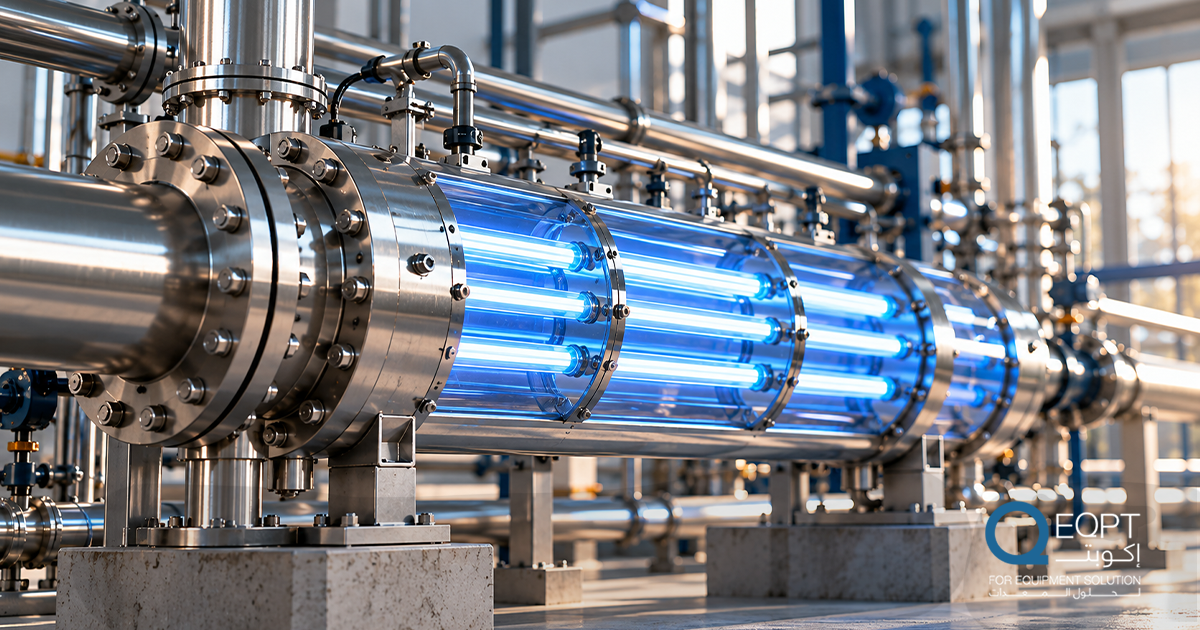
UV disinfection uses short contact time and produces no chemical byproducts, making it well suited to facilities that would otherwise need to dechlorinate (a step also central to RO pretreatment), or that are constrained on space and want a compact system that retrofits into existing infrastructure. UV is effective against chlorine-resistant pathogens including Cryptosporidium. Its central limitation is that it provides no residual protection — it cannot prevent bacterial regrowth once water leaves the treatment point, so it is not a substitute for chlorination in a distribution network context, only for other applications. UV performance also depends on water quality — transmittance, suspended solids, and dissolved metals all affect dose delivery — and requires regular lamp and quartz sleeve maintenance (low-pressure lamps are typically rated for roughly 8,000 to 12,000 hours; quartz sleeves are replaced when damaged or when irreversible fouling reduces UV intensity).
Ozone: Powerful Oxidation, Short Half-Life
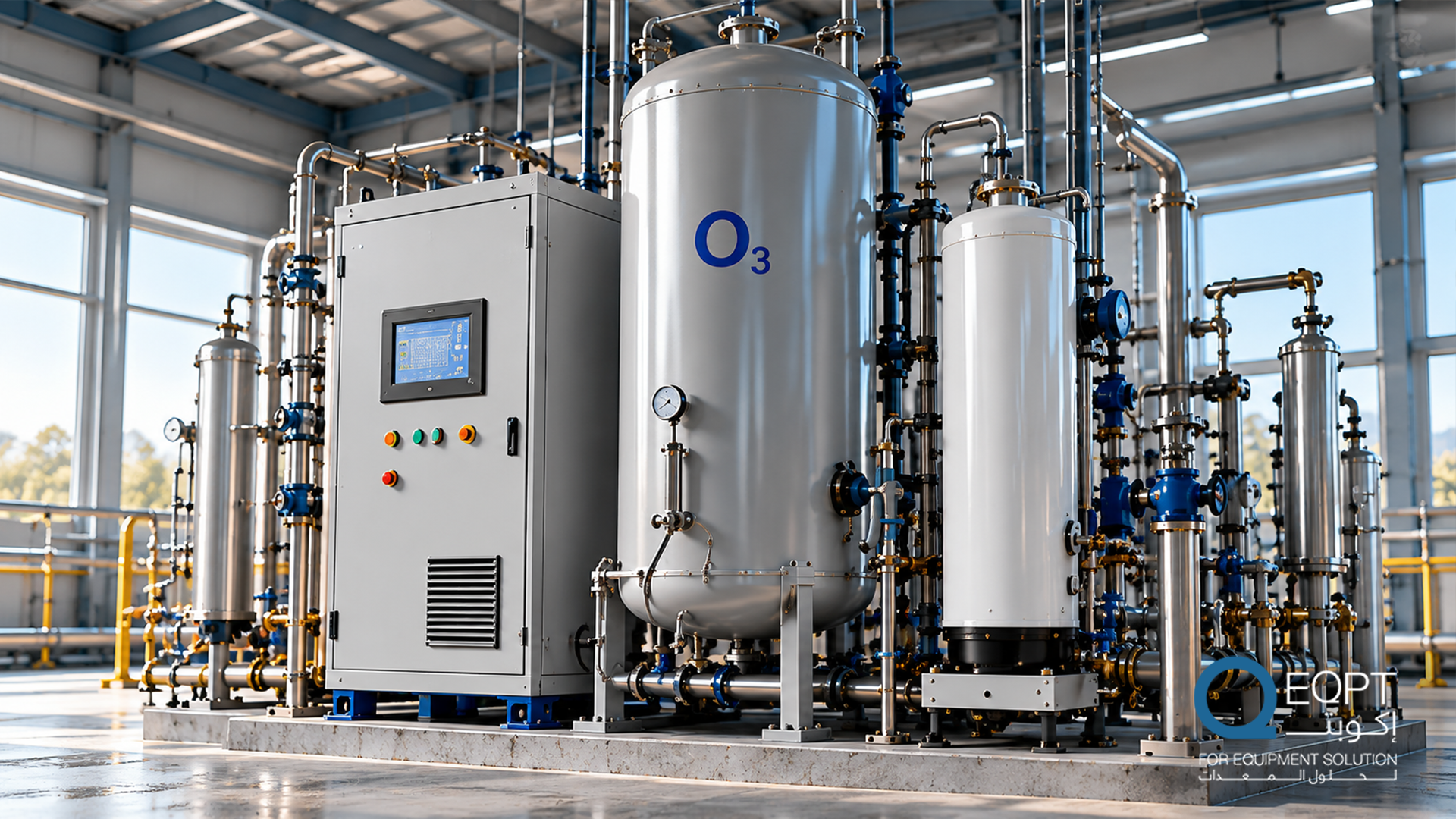
Ozone is the most powerful oxidant of the three, effective not only against resistant pathogens but also against taste, odor, color, and iron/manganese — and it is one of the more effective tools for managing harmful algal blooms. Its limitations are also specific: ozone has a short half-life, limiting its usefulness where long contact time is required; it carries higher capital cost and a larger infrastructure footprint than UV or chlorination; and in bromide-containing source waters, ozonation carries a risk of forming bromate, a regulated byproduct.
Monitoring and the Multi-Barrier Approach
Because each technology has a gap the others cover, many well-engineered systems combine them rather than choosing one: ozone or UV for primary disinfection of resistant pathogens, followed by a smaller chlorine dose to carry residual protection into the distribution network. This multi-barrier approach is increasingly the practical answer to “which is best” — it isn’t one technology, it’s the right combination for the specific risk profile and distribution requirement.
Whatever combination is chosen, real-time monitoring — residual chlorine, UV dose/transmittance, ozone residual where applicable — is what confirms the system is actually delivering the disinfection it was designed for, rather than assuming it based on equipment specifications alone. How that monitoring fits into one coordinated control strategy is covered in our article on water treatment system design and component compatibility.
Saudi/GCC Context
Desalinated water (see our article on efficient desalination plants) entering GCC distribution networks typically starts with very low organic content, which changes the DBP calculus relative to surface-water-fed systems elsewhere — but long, hot distribution networks common in the region still require a reliable residual to prevent regrowth over transit and storage. That combination (low organic feedwater, long/hot distribution) is part of why many desalination-fed networks in the region rely on chlorination for residual protection even where UV or ozone is used earlier in the treatment train.
Practical Engineering Considerations
Select disinfection technology based on the actual pathogens of concern, whether distribution residual is required, feedwater organic content and bromide levels, available space and capital budget, and the facility’s realistic capacity for chemical handling or lamp/sleeve maintenance. Where a single technology can’t satisfy all requirements — which is common — design for a multi-barrier approach rather than forcing one technology to do more than it is suited for.
The EQPT Perspective
EQPT supplies UV sterilizers, dosing pumps and related disinfection equipment as part of a broader treatment portfolio, and treats disinfection technology selection as an application-specific engineering decision — not a single default recommendation. The right technology, or combination, depends on the water quality and distribution requirements of each project.
Key Takeaways
- Chlorination provides residual protection for distribution networks but forms DBPs and is less effective against chlorine-resistant pathogens.
- UV is fast and byproduct-free but provides no residual, and its performance depends on feedwater quality.
- Ozone offers the strongest oxidation and multiple water-quality benefits but has a short half-life, higher cost, and bromate risk in bromide-containing water.
- Multi-barrier combinations (e.g., UV or ozone for primary disinfection, chlorine for residual) are often the practical answer rather than a single “best” technology.
Conclusion
There is no universally correct disinfection technology — there is only the right technology, or combination, for a given water quality profile, risk tolerance, and distribution requirement. Engineers who evaluate against that framework, rather than a vendor’s preferred narrative, end up with systems that actually match their application.
Evaluating disinfection options for a new or upgraded system? EQPT’s technical team can help assess UV and related equipment against your water quality and application requirements.
FAQ
Q: Is UV disinfection a replacement for chlorination?
Not generally. UV lacks a residual, so it cannot protect water as it travels through a distribution network the way chlorine can. The two are often used together.
Q: Why does ozone carry a bromate risk?
In source waters containing bromide, ozone can oxidize bromide into bromate, a regulated disinfection byproduct — this risk should be assessed against source water chemistry before selecting ozone.
Q: Does desalinated water need less disinfection because it starts cleaner?
Lower organic content reduces DBP formation risk, but long or hot distribution networks still require residual protection to prevent microbial regrowth in transit and storage.
Q: Can more than one disinfection technology be used in the same system?
Yes — multi-barrier designs combining UV or ozone for primary disinfection with a chlorine residual are common and often outperform any single technology used alone.