Introduction
RO membrane selection is often treated as a procurement step: compare data sheets, compare price per element, choose. That approach works until the plant is commissioned against real feedwater, and the membrane that looked correct on paper starts fouling faster than expected, running at lower flux than modeled, or failing to hit its rejection target under actual operating temperature and pressure.
The membrane is not an isolated product. It is one variable in a system defined by feedwater chemistry, recovery targets, energy budget, and cleaning regime. Selecting it correctly means working backward from how the plant will actually operate, not forward from a manufacturer’s headline spec. This article sets out the engineering logic — not a product comparison — behind that decision.
Start With Feedwater, Not the Catalog
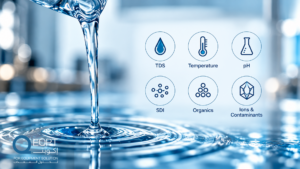
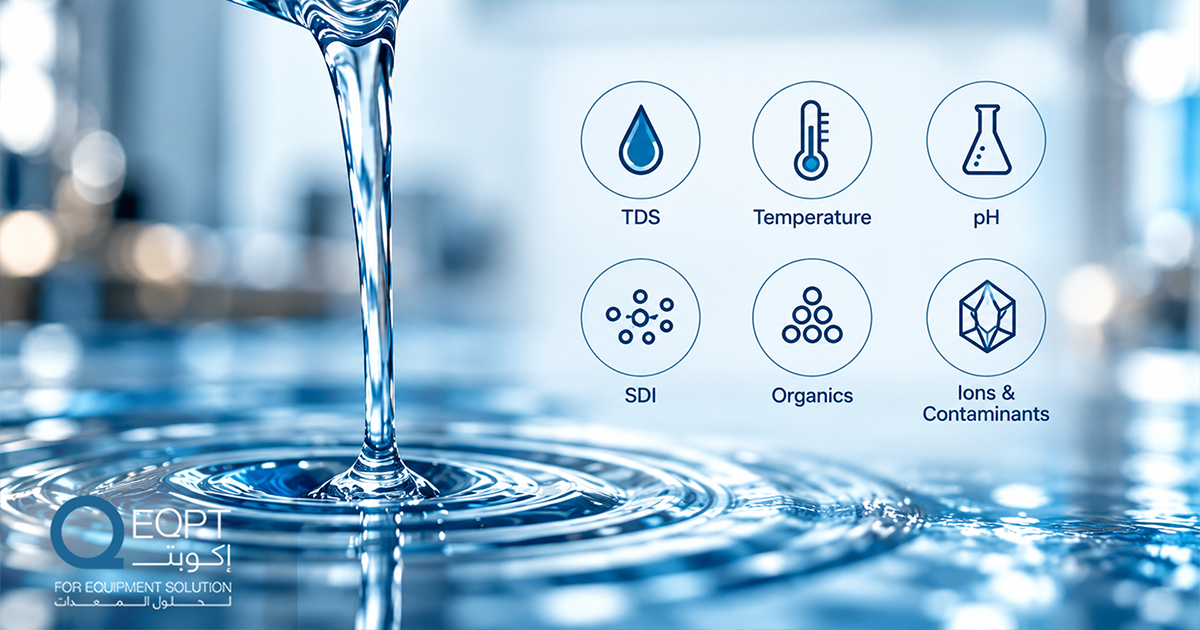
Every membrane specification decision should begin with a complete feedwater characterization: total dissolved solids (TDS), ionic composition, temperature range, pH, silt density index (SDI), organic content, and any site-specific contaminants (iron, manganese, silica, bromide). TDS alone determines whether the application calls for a brackish water (BW) membrane or a seawater (SW) membrane family, and it drives the operating pressure envelope — commercial membranes typically operate from around 70 psi for low-energy brackish elements up to roughly 1,200 psi for high-pressure seawater desalination duty.
Temperature matters more than it’s often given credit for. Most commercial thin-film composite membranes are rated for optimal performance between roughly 25–35°C; permeate flux rises with temperature but salt rejection tends to decline, and sustained operation above the manufacturer’s maximum (commonly around 45°C) risks permanent membrane damage. In regions with high ambient feedwater temperature swings, this is not a footnote — it shapes the whole design basis.
Recovery, Pressure, and Salt Rejection Are One Decision, Not Three

Recovery rate (the percentage of feed that becomes permeate) and salt rejection are in tension. Commercial systems commonly target recovery in the 50–85% range depending on feedwater quality; pushing recovery higher concentrates rejected salts and foulants in the remaining stream, increasing scaling risk and often requiring antiscalant dosing or a second pass. Salt rejection rates for quality commercial membranes span roughly 98% to 99.75% — the right figure depends on the permeate quality the downstream application actually requires, not the highest number on the spec sheet. Over-specifying rejection without need adds unnecessary operating pressure and energy cost.
The energy side of this trade-off is covered in more detail in our article on why identical RO plants consume different amounts of energy.
Membrane Configuration and Element Sizing
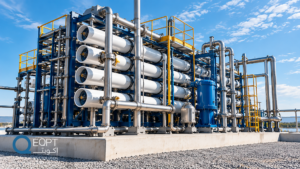
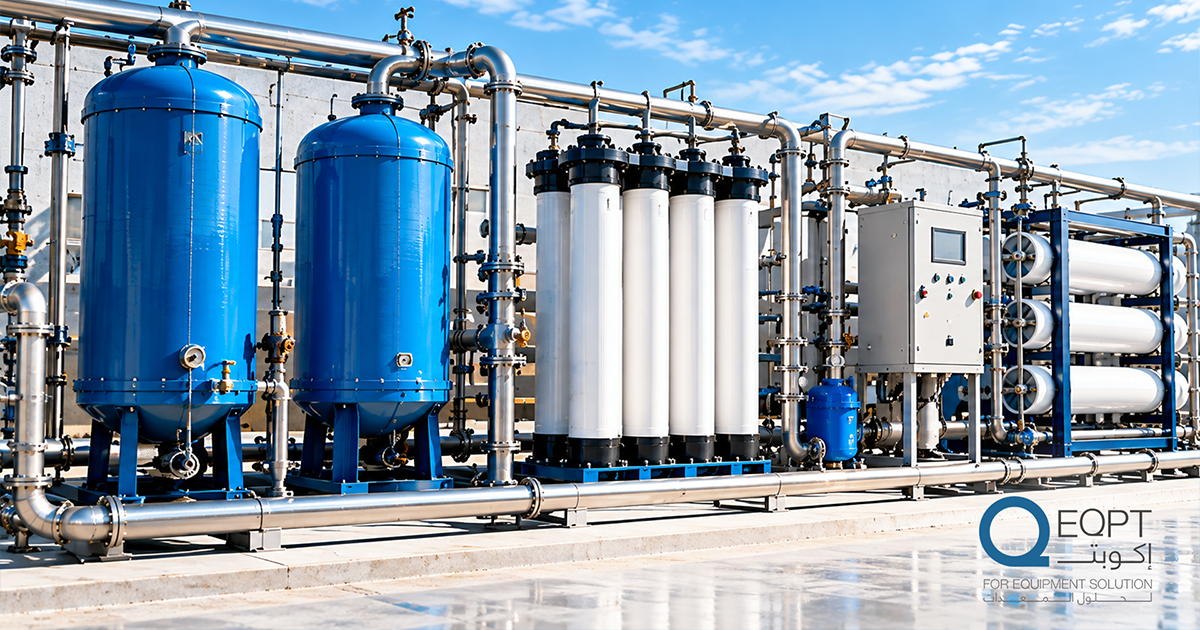
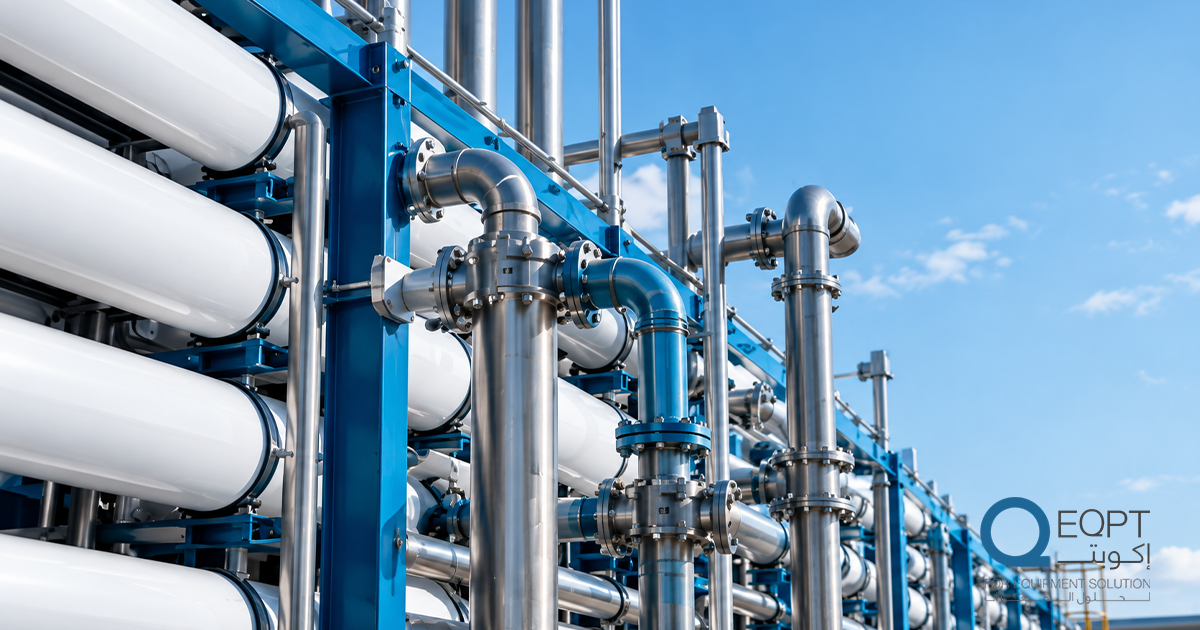
Spiral-wound elements remain the dominant configuration for municipal and industrial RO, available in standard 2.5″, 4″, and 8″ diameters; larger elements suit higher-flow industrial and desalination applications, while smaller diameters fit compact or modular systems. Configuration choice also interacts with pretreatment: spiral-wound modules generally tolerate SDI up to about 5, while more fouling-sensitive configurations (including some hollow-fiber designs) require SDI below 3 — meaning the membrane and the pretreatment train have to be specified together, not sequentially.
Fouling, Scaling, and the Cleaning Regime You’re Committing To
The membrane selected also determines the cleaning regime the plant will live with for years. Chemically resistant, fouling-tolerant membrane series exist specifically for challenging feedwater, but they typically trade some flux or energy efficiency for that resilience. Selecting a high-flux, low-fouling-resistance membrane for a difficult surface water or reused wastewater feed — without matching pretreatment — shifts the fouling and scaling problem downstream into more frequent chemical cleaning (CIP) cycles, which shortens membrane life (commercial elements are typically expected to perform for 3–5 years under proper operating conditions) and raises operating cost.
Saudi/GCC Feedwater Context
GCC feedwater sources split broadly into two demanding categories: high-TDS, high-temperature seawater for desalination, and brackish groundwater with variable silica, hardness, and sometimes elevated boron content. Both push membrane selection toward the higher end of the pressure and chemical-resistance spectrum, and both make pretreatment quality (covered in depth in the next article in this series) a determining factor in whether the selected membrane performs as modeled. A membrane spec that works well against a European surface-water brief will often be the wrong choice for a Gulf seawater or brackish well application — which is why generic specification sheets need local feedwater data before they mean anything.
Practical Engineering Considerations
Before finalizing a membrane selection: confirm actual feedwater analysis (not assumed regional averages), model recovery against real seasonal temperature swings, size pretreatment to the membrane’s SDI tolerance rather than the reverse, and price the cleaning and replacement cycle into total cost of ownership — not just the unit cost of the element.
The EQPT Perspective
EQPT Solutions supplies RO membranes and related pretreatment, pumping, and dosing equipment across the Saudi market, and works with engineers to match membrane selection to submitted feedwater data rather than defaulting to a single standard configuration. Where feedwater analysis is uncertain or incomplete, that gap should be closed before a membrane is specified — not after commissioning reveals it.
Key Takeaways
- Membrane selection starts with complete feedwater characterization: TDS, temperature, pH, SDI, and site-specific contaminants.
- Recovery rate, operating pressure, and salt rejection are interdependent decisions, not independent spec-sheet lines.
- Membrane configuration and pretreatment must be specified together — an element’s SDI tolerance defines the pretreatment it needs.
- Fouling-resistant membranes trade some flux for resilience; the right trade-off depends on real feedwater difficulty, not a generic default.
- Total cost of ownership includes cleaning frequency and expected 3–5 year element life, not just unit price.
Conclusion
Treating RO membrane selection as a design decision — grounded in feedwater data, recovery targets, and lifecycle cost — produces systems that perform close to their design model for years. Treating it as a product choice produces systems that need correcting after the fact, usually at higher cost than getting the specification right the first time.
Need help matching membrane selection to your project’s actual feedwater profile? EQPT Solutions’ technical team can review your feedwater data alongside membrane and pretreatment options.
FAQ
Q: What is the single most important factor in RO membrane selection?
There isn’t one — feedwater TDS, temperature, SDI, and target recovery all interact. Optimizing for one in isolation (like maximum salt rejection) often creates problems elsewhere (like energy cost or fouling rate).
Q: How does recovery rate affect membrane life?
Higher recovery concentrates rejected salts and foulants in a smaller reject stream, raising scaling and fouling risk and typically shortening the interval between chemical cleanings.
Q: Can the same membrane work for both brackish and seawater applications?
Generally no. Brackish and seawater membrane families are built for different pressure ranges and salt-rejection duty; using the wrong family under- or over-engineers the system.
Q: How often should RO membranes be replaced?
Typical service life is around 3–5 years under correct operating conditions, though actual life depends heavily on feedwater quality, pretreatment effectiveness, and cleaning discipline.