Introduction
A reverse osmosis membrane selected correctly for a given feedwater can still underperform, foul early, or need cleaning far more often than modeled — and the cause frequently traces back to the stage before the membrane ever sees the water. RO pretreatment is not a preliminary formality ahead of the “real” treatment step; it is what determines whether the membrane operates within the conditions it was actually specified for.
This article looks at what pretreatment is actually protecting against, how silt density index (SDI) and turbidity function as the design targets that connect pretreatment to membrane performance, and why pretreatment and membrane selection have to be specified together rather than as sequential, independent decisions.
What Pretreatment Is Actually Protecting Against
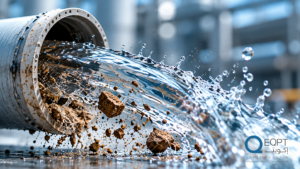
RO membranes fail to perform as modeled for a small number of recurring reasons: suspended solids and colloidal material physically blocking the membrane surface (particulate fouling), biological growth on the membrane (biofouling), mineral precipitation as rejected salts concentrate in the reject stream (scaling), and residual oxidants such as free chlorine attacking the membrane’s polymer structure. Pretreatment exists to remove or control each of these before the feedwater reaches the membrane array, since none of them can be corrected downstream once the membrane is fouled or damaged.
SDI and Turbidity: The Numbers That Define the Handoff
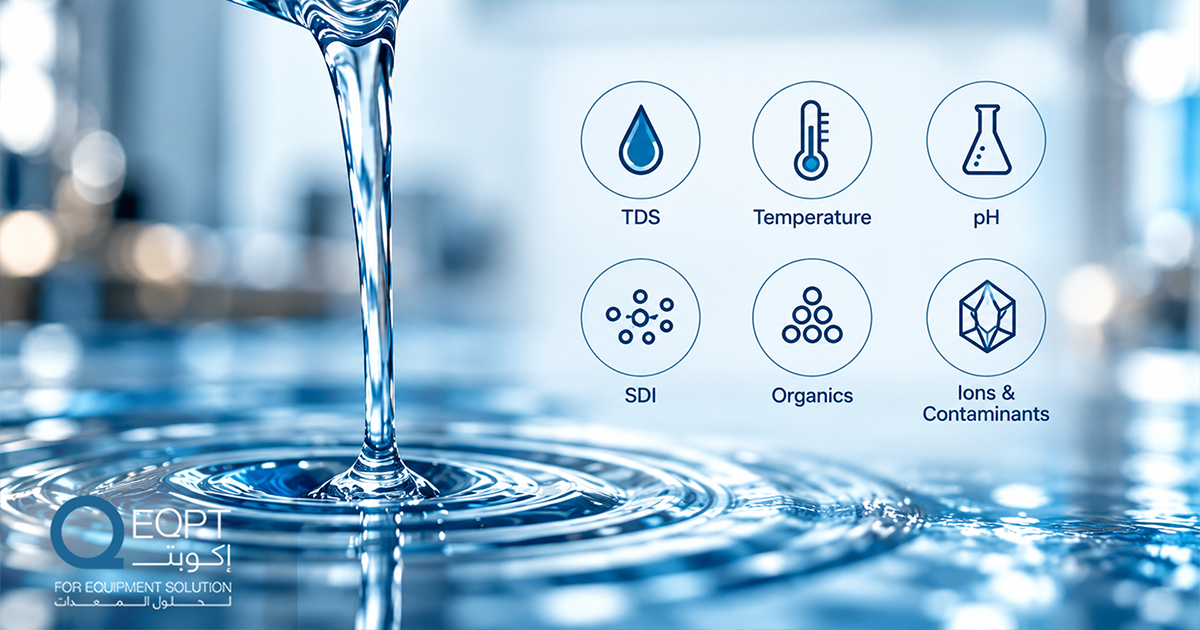
Silt Density Index (SDI), measured per ASTM D4189, is the standard quantitative measure of a feedwater’s fouling potential and is the primary specification connecting pretreatment performance to membrane tolerance. Spiral-wound RO elements are commonly specified against an SDI target below 5, with well-designed pretreatment trains typically targeting SDI below 3 for a meaningful fouling-rate margin; more fouling-sensitive membrane configurations require even lower SDI. Turbidity, typically targeted below 1 NTU ahead of the RO array (and often lower ahead of ultrafiltration), is a faster, simpler field measurement that tracks alongside SDI but does not replace it for design purposes. A pretreatment train that hits its turbidity target but has not been verified against SDI has not actually confirmed membrane protection.
The Pretreatment Train: Stages and What Each One Removes
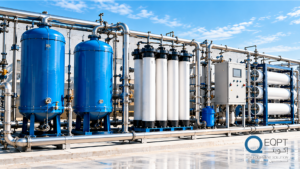
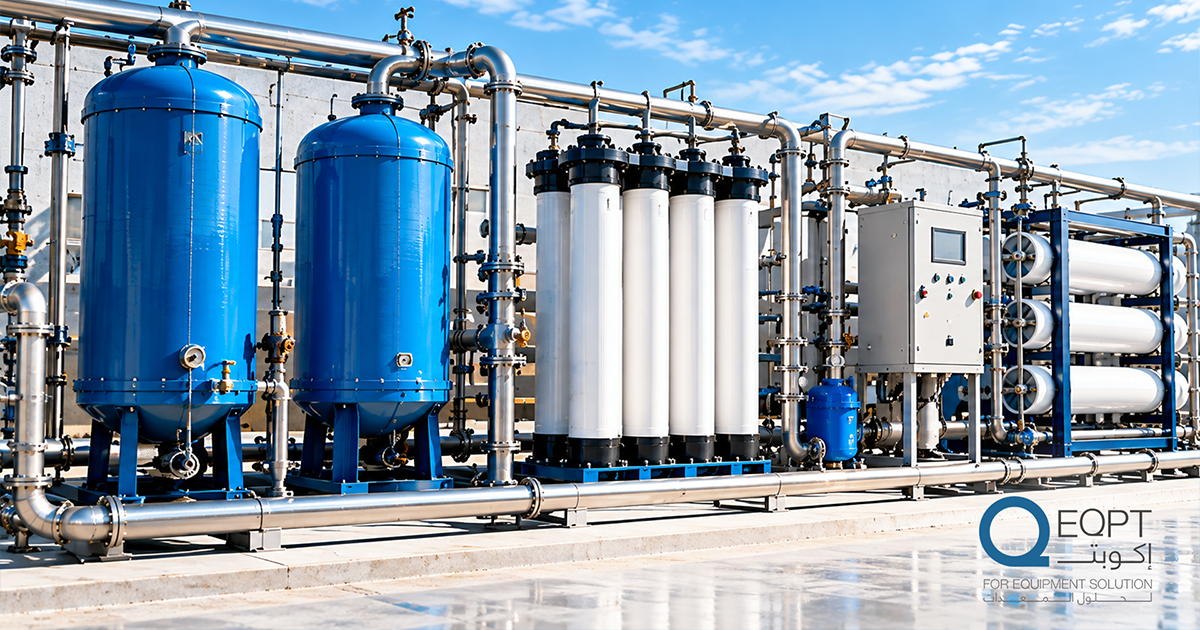
A typical pretreatment train for surface water, well water, or industrial process water combines several stages, each addressing a different fouling mechanism: coarse screening and multimedia or ultrafiltration (UF) filtration to remove suspended solids and reduce SDI/turbidity to target; cartridge filtration (commonly 5 micron, sometimes finer) as a final polishing stage directly ahead of the RO array; antiscalant dosing to control scaling as rejected salts concentrate; and dechlorination, typically via activated carbon or sodium bisulfite (SBS) injection, to protect thin-film composite membranes from oxidative damage. UF pretreatment has become increasingly common ahead of RO because it delivers more consistent SDI performance than multimedia filtration alone, particularly on variable surface water sources, though it adds capital and operating cost that has to be justified against the feedwater’s actual fouling risk.
How this choice plays out at plant level is explored in our article on the engineering decisions behind efficient desalination plants.
Why Pretreatment and Membrane Selection Are One Decision
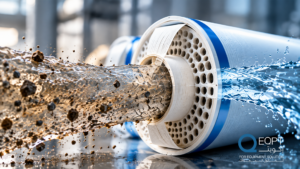
A pretreatment train specified without reference to the selected membrane’s actual SDI tolerance is a common source of underperformance: pretreatment sized to a generic target rather than the membrane’s real requirement either over-invests in filtration the membrane doesn’t need or under-protects a membrane that needed a tighter SDI than the train delivers. The reverse is equally common — a membrane specified against an assumed pretreatment performance that the installed train doesn’t actually achieve. Specifying pretreatment against the membrane’s documented SDI tolerance, and verifying that tolerance is met with field SDI testing rather than turbidity alone, closes this gap before commissioning rather than after.
Practical Engineering Considerations
Before finalizing a pretreatment design: confirm SDI performance with actual field testing per ASTM D4189, not turbidity alone; size pretreatment against the specific membrane’s documented SDI and chlorine tolerance rather than a generic target; verify dechlorination is monitored (residual chlorine testing ahead of the RO array), since dosing failures are a common cause of membrane oxidation damage; and review antiscalant dosing against actual recovery targets and feedwater scaling indices, not a fixed dosing rate.
Pretreatment failures carry a cost beyond the membrane itself: a fouled or scale-damaged element typically means unplanned downtime while the array is cleaned or the element is replaced, and lost production during that window is a direct cost on top of the replacement expense. Viewed this way, a pretreatment train sized correctly for the feedwater and the membrane’s actual tolerance is not simply an added upfront cost — it is what protects the return on the system’s overall capital investment by keeping the plant running to its designed uptime.
The EQPT Perspective
EQPT Solutions supplies cartridge and media filtration, dosing systems, and RO-related pretreatment components alongside the membranes and pumps they support, which allows pretreatment to be specified against the same feedwater data and membrane tolerance used for the rest of the system rather than as an independent line item. Where SDI performance has not been field-verified against the selected membrane’s tolerance, that gap should be closed before commissioning, not discovered through early fouling.
Key Takeaways
- Pretreatment failures are the most common root cause of RO membranes underperforming their modeled spec.
- SDI, measured per ASTM D4189, is the design-level metric connecting pretreatment performance to membrane fouling tolerance; turbidity is a useful field check but not a substitute.
- A typical pretreatment train combines multimedia or UF filtration, cartridge filtration, antiscalant dosing, and dechlorination — each addressing a distinct fouling mechanism.
- Pretreatment and membrane selection must be specified against the same feedwater data and SDI tolerance, not sequentially.
- GCC feedwater sources (seawater vs. brackish groundwater) require materially different pretreatment designs; a generic spec is a common cause of early fouling.
Conclusion
RO pretreatment is not preparation for the real treatment step — it is the design decision that determines whether the membrane downstream performs to its modeled spec or fouls ahead of schedule. Specifying it against the membrane’s actual SDI tolerance and verified feedwater data, rather than a generic filtration checklist, is what keeps a system’s fouling rate and cleaning frequency close to design intent for the life of the plant.
Reviewing a pretreatment design or troubleshooting fouling issues? EQPT Solutions’ technical team can help match filtration, dosing, and pretreatment components to your feedwater and membrane requirements.
FAQ
Q: What is SDI and why does it matter for RO pretreatment?
Silt Density Index, measured per ASTM D4189, quantifies a feedwater’s fouling potential and is the standard metric used to confirm pretreatment adequately protects a specific membrane’s fouling tolerance.
Q: Is turbidity the same as SDI?
No. Turbidity is a faster, simpler field measurement that generally tracks with SDI but does not replace it — pretreatment design should be verified against SDI, not turbidity alone.
Q: Why is dechlorination part of pretreatment?
Thin-film composite RO membranes are vulnerable to oxidative damage from residual chlorine; dechlorination via activated carbon or sodium bisulfite protects the membrane before it is damaged, since chlorine damage cannot be reversed downstream.
Q: Does ultrafiltration replace multimedia filtration ahead of RO?
Not necessarily — UF typically delivers more consistent SDI performance on variable feedwater and is increasingly common ahead of RO, but the right choice depends on feedwater variability and the cost/performance trade-off for the specific project.