Water is essential for life, but the quality of water you drink can have a significant impact on your health and household. Distilled water is one of the purest forms available, free from minerals, bacteria, viruses, and chemical contaminants.
Its exceptional purity makes it ideal not only for drinking but also for use in appliances, medical devices, and laboratory applications. However, while it offers many benefits, there are also considerations to keep in mind.
In this guide, we cover the uses, benefits, risks, and safety tips of distilled water to help you make informed choices.
What Is Distilled Water?
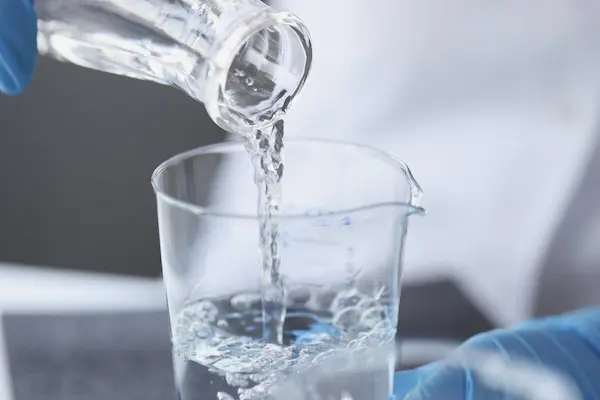
Distilled water is a type of purified water produced by distillation, in which water is boiled to generate steam, then condensed back into liquid form. This process removes minerals, impurities, bacteria, viruses, and chemical contaminants, resulting in exceptionally pure water.
Unlike tap or filtered water, distilled water contains almost no dissolved solids, making it ideal for laboratory use, medical procedures, and industrial applications.
The distillation process removes heavy metals such as lead, mercury, and arsenic, as well as trace chemicals, providing a reliable source of pure water.
What Is Distilled Water Used For?
Distilled water has a wide range of uses across domestic, medical, and industrial applications:
Household Applications
- Steam Irons and Appliances: Prevents mineral buildup in irons and coffee makers.
- Humidifiers: Reduce bacteria and mold growth in water tanks.
- Car Batteries and Vehicle Cooling Systems: Prevents scaling and corrosion caused by tap water.
Medical and Laboratory Uses
- Medical Devices: Required for CPAP machines, autoclaves, and diagnostic equipment.
- Laboratory Experiments: Ensures accuracy in chemical reactions by eliminating interference from minerals and impurities.
Industrial and Commercial Uses
- Manufacturing Processes: Electronics, pharmaceuticals, and food processing often rely on distilled water for consistency and quality.
- Cooling Systems and Boilers: Prevents scaling, corrosion, and inefficiency in high-pressure systems.
Can You Drink Distilled Water?
Drinking distilled water is generally safe for short-term consumption, but consider the following:
Advantages
- Purity: Free from bacteria, viruses, and chemical pollutants.
- Controlled Mineral Intake: Ideal for individuals limiting sodium, calcium, or magnesium.
Potential Risks
- Lack of Minerals: Long-term exclusive consumption may reduce mineral intake.
- Taste Considerations: May taste flat due to the absence of minerals.
- Electrolyte Balance: Excessive consumption without dietary minerals can affect electrolyte levels.
Occasional drinking or using distilled water as part of a varied water intake is safe and can provide a temporary solution in areas with poor water quality.
Is Distilled Water Just Boiled Water?
No. While boiling kills bacteria and pathogens, it does not remove minerals, heavy metals, or chemical contaminants. Distilled water undergoes a full distillation process:
- Boiling water to produce steam.
- Condensing the steam into a separate container.
- Discarding remaining impurities.
This ensures distilled water is free from substances that remain in boiled water.
Can I Make Distilled Water at Home?
Yes, with a simple distillation setup:
Method 1: Stove-Top Distillation
- Fill a large pot halfway with tap water.
- Place a smaller heat-resistant bowl inside, floating above the water.
- Cover with an inverted lid so steam condenses into the bowl.
- Heat to boiling, collect condensed water.
Method 2: Electric Distillers
Devices automate boiling, condensation, and collection, providing a safer and efficient method. Tips: Use clean containers, avoid collecting water in the same pot, and store in sealed glass or BPA-free containers.
Comparing Distilled Water and UV Sterilized Water
At EQPTSolution, we offer UV Sterilizer systems under our UV Sterilizer category, providing an alternative method of purifying water.
| Feature | Distilled Water | UV Sterilized Water (EQPTSolution UV Sterilizer) |
| Purity | Removes all minerals, heavy metals, and contaminants | Kills bacteria and viruses but does not remove minerals |
| Taste | Flat, mineral-free | Retains natural taste, minerals intact |
| Applications | Labs, medical devices, industrial processes | Household, drinking water, hospitals, commercial use |
| Production | Requires distillation process | Uses UV light to sterilize existing water |
| Maintenance | Store in clean containers | Replace UV lamps periodically, follow manufacturer instructions |
Key Insight:
- Distilled water offers maximum purity, ideal for equipment and scientific use.
- UV Sterilized water is excellent for everyday drinking and household use, retaining beneficial minerals while ensuring microbiological safety.
Benefits of Drinking Distilled Water
- Eliminates Contaminants: Removes heavy metals, chlorine, and microbial contaminants.
- Supports Sensitive Equipment: Safe for appliances like CPAP machines or humidifiers.
- Controlled Mineral Intake: Ideal for specific diets.
- Neutral Taste: Free from chemical odors or flavors.
Safety Tips When Drinking Distilled Water
- Balance Your Diet: Ensure mineral intake through food or supplements
- Use Clean Containers: Prevent contamination after distillation.
- Moderate Consumption: Rotate between distilled and other safe water sources.
- Check Source Quality: Even distilled water can be contaminated if stored improperly.
Conclusion
Distilled water is one of the purest forms of water, free from bacteria, viruses, chemicals, and minerals While it is ideal for laboratories, medical devices, and industrial applications, UV Sterilizers from EQPT Solution provide a practical solution for households and drinking water, ensuring microbiological safety while preserving minerals.
For those looking to take water purification to the next level, we also offer a wide range of Cartridge Filters to enhance water quality at home or in commercial applications.
FAQ
Is distilled water safe to drink?
Yes, distilled water is safe for short-term consumption. It is free from bacteria, viruses, and chemical contaminants. For long-term use, ensure you get minerals from food or other water sources.
What is distilled water and how is it made?
Distilled water is purified water produced by boiling water to create steam, then condensing it back into liquid. This removes minerals, impurities, and contaminants.
Does distilled water remove minerals from your body?
No, distilled water does not extract minerals from your body. However, drinking only distilled water for long periods may reduce your dietary mineral intake.
What are the benefits of drinking distilled water?
It eliminates contaminants, supports sensitive appliances, provides controlled mineral intake, and has a neutral taste free from chemical odors.
What are the risks of drinking distilled water?
Long-term exclusive consumption may reduce mineral intake. Some people may find its taste flat. Excessive use without dietary minerals can affect electrolyte balance.
Can distilled water be used for everyday purposes?
Yes, it is ideal for appliances like irons, humidifiers, car batteries, and cooking where mineral buildup must be avoided.
Is distilled water different from boiled or filtered water?
Yes. Boiled water kills bacteria but does not remove minerals or contaminants. Filtered water may remove some impurities but retains minerals. Distilled water is nearly 100% pure.